





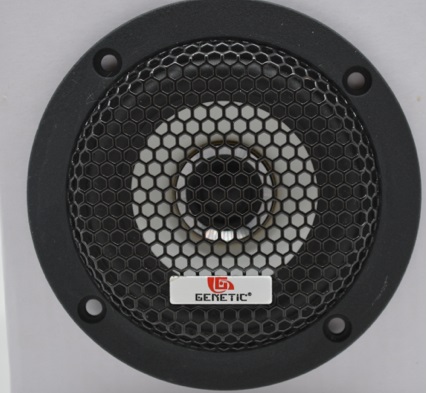
Speakers:
A speaker converts electrical energy to mechanical/acoustical energy. It uses a coil of wire, which acts as an electromagnet, set inside of a magnetic gap of a permanent magnet. The following demo shows the main components of a woofer. Holding your cursor over the individual buttons will highlight the respective component.
Voice coil motivation:
When a current is passed through the coil of wire, called the voice coil, it generates a magnetic field. This electromagnet interacts with the field in the magnetic gap and the voice coil moves. The direction of movement depends on the direction of current flow through the VC. Since audio is an AC waveform, current flows in one direction and then changes polarity, the VC moves either forward or backward from its point of rest. The diagram below shows how the VC is connected to the cone of the speaker. The cone is the part of the speaker that actually makes the sound by alternately creating an area of high and then low air pressure.
Magnitude of cone movement:
When an amplifier drives a speaker, it is driving the speaker terminals with AC voltage. If the volume is at its minimum position, the speaker doesn't move. If the driving voltage is low, the speaker moves a little. As the voltage increases (when you turn up the volume), the cone moves further from it's point of rest. Higher power amplifiers can drive the speaker with higher voltage and therefore produce more SPL (volume).


